
UK Peptides: A Plain-English Research Overview
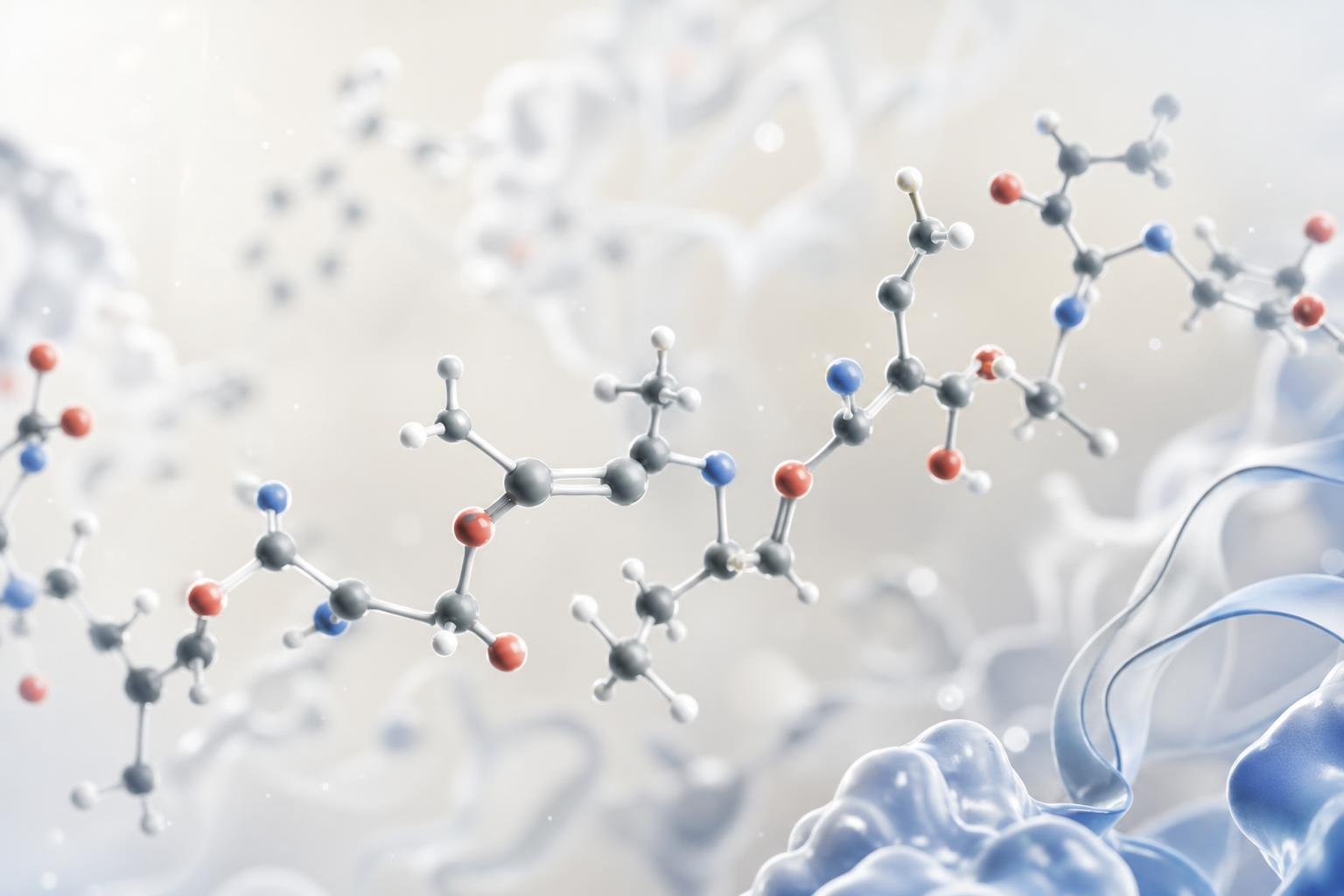
Peptides are short chains of amino acids linked by peptide bonds, and they play many roles in biology, from cell signalling to structural support. For anyone searching for UK peptides, the safest starting point is to understand the science first: the same word can refer to natural molecules in the body, laboratory research materials, cosmetic ingredients, or regulated medicines depending on context and intended use.
What are peptides?
Peptides are molecules made from amino acids, the same building blocks that form proteins. Amino acids join together through chemical links called peptide bonds. A chain of only a few amino acids may be called a short peptide, while longer chains begin to overlap with the definition of a protein. There is no single universal cut-off, but peptides are often described as smaller than proteins and less complex in their folding.
This simple structure gives peptides a remarkable range of biological functions. Some act as messengers, telling cells to start or stop particular processes. Others are fragments produced when proteins are broken down. In laboratories, peptides can be designed and synthesised to help scientists study immune responses, enzyme activity, receptor binding, cell behaviour and molecular structure.
How peptides relate to proteins, hormones and cells
The relationships are easiest to understand as a hierarchy. Amino acids are the units. Peptides are short chains of those units. Proteins are generally larger chains that often fold into stable three-dimensional shapes. Cells produce all of these molecules as part of normal biology.
Some hormones are peptides or peptide-like molecules. In these cases, the peptide is a signal: it is released by one tissue, travels locally or through the bloodstream, and binds to receptors on target cells. The receptor is usually a protein embedded in or on a cell membrane. When the peptide binds, the receptor changes behaviour and triggers a response inside the cell.
Not all peptides are hormones, and not all peptide activity is beneficial or clinically useful. A peptide that has an interesting effect in a cell experiment may behave very differently in a living organism, where it can be broken down by enzymes, cleared from circulation, fail to reach a target tissue, or interact with many systems at once.
Why peptides are important in research
Peptides are useful scientific tools because they can be made with a defined sequence of amino acids. This allows researchers to test how small changes in sequence affect structure, binding and activity. Their relatively small size also makes them practical for many biochemical and analytical methods.
Common research uses
- Mapping protein interactions: short peptide fragments can help identify which parts of proteins bind to other molecules.
- Immunology: peptide fragments are used to study how immune cells recognise parts of viruses, bacteria, allergens or human proteins.
- Enzyme studies: designed peptide substrates help measure whether an enzyme cuts, modifies or recognises a particular sequence.
- Structural biology: peptides can model flexible regions of larger proteins or help probe receptor binding sites.
- Materials science: some peptides can self-assemble into fibres, gels or nanoscale structures, making them interesting for experimental biomaterials research.
These uses are not the same as evidence that a peptide is safe or effective for personal use. Laboratory findings are part of a long chain of investigation, not a shortcut to health claims.
Natural, synthetic and modified peptides
A natural peptide is produced by a living organism. A synthetic peptide is made by chemical or biotechnological methods to match a chosen sequence. A modified peptide has chemical changes that may alter its stability, solubility, charge, shape or interactions with receptors and enzymes.
Modification is common in research because unmodified peptides can be fragile. Enzymes called peptidases and proteases can break them down quickly. Scientists may alter amino acids, add protective groups, or change the chain length to explore how the molecule behaves. These changes can also create new uncertainties, so each modified peptide must be assessed on its own properties rather than assumed to behave like a natural one.
Peptides in medicine, cosmetics and general claims
Some established medicines are peptide-based or protein-based, and they are assessed through formal development and regulatory processes. That does not mean that every peptide discussed online is a medicine, or that research materials are suitable for human use. Classification depends on factors such as composition, intended purpose, claims made and route of use.
Peptides also appear in cosmetic science, where certain ingredients are used in formulations designed for the skin surface. Cosmetic claims are different from medical claims. A product described as supporting the appearance of skin is not the same as a treatment for a disease, injury or medical condition.
For a UK audience, it is especially important to separate educational information from marketing language. The relevant framework may differ depending on whether a substance is being discussed as a research chemical, cosmetic ingredient, medicine, food-related ingredient or laboratory reagent. When in doubt, rely on qualified professionals and official regulatory sources rather than social media summaries.
How to read peptide information critically
Peptide topics often attract bold claims because the science sounds precise. A careful reader should ask what kind of evidence is being presented and what it can actually show.
- Cell study: useful for mechanisms, but it does not show what happens in a whole human body.
- Animal study: can reveal biological effects, but results may not translate to people.
- Human clinical study: more directly relevant, but quality depends on design, size, controls and outcomes.
- Anecdote: personal reports can generate questions, but they cannot establish safety, effectiveness or cause and effect.
It is also worth checking whether the exact peptide, dose form, purity, route, population and outcome match the claim being made. A small sequence difference can change how a peptide behaves. A result from one context should not be stretched across unrelated uses.
Key limitations and safety considerations
Peptides are not automatically safe because they are made from amino acids. Their activity depends on sequence, structure, concentration, route of exposure, impurities, immune effects and how the body processes them. Some may have no meaningful biological effect in a particular setting; others may be potent signalling molecules.
This article is an educational overview, not guidance on diagnosis, treatment, personal use, sourcing or dosing. Questions about medicines, health conditions or exposure risks should be taken to appropriately qualified professionals. For laboratory work, proper risk assessment, documentation and institutional procedures are essential.
FAQ
Are peptides the same as proteins?
No. Both are made from amino acids, but peptides are generally shorter chains, while proteins are usually larger and often fold into more complex structures. The boundary is not always exact.
Are all peptides hormones?
No. Some hormones are peptides, but many peptides are fragments, research tools, signalling molecules, antimicrobial candidates or structural motifs with other roles.
Does laboratory evidence prove a peptide works in people?
No. Cell and animal studies can be scientifically valuable, but they do not by themselves establish safety or effectiveness in humans.
Why is the term used in so many different ways?
Because “peptide” describes a chemical structure, not a single product category. Context determines whether the discussion is about biology, research, cosmetics, medicines or another field.
Bottom line
Peptides are central to modern bioscience because they connect chemistry, cell signalling and protein biology. A sensible UK-focused understanding starts with the basics: identify what type of peptide is being discussed, what evidence supports the claim, and whether the context is research, cosmetic, medical or purely educational.
Intended for in-vitro laboratory research only. Not for human or animal consumption.