
Tirzepatide peptide in the UK: a plain-English research overview
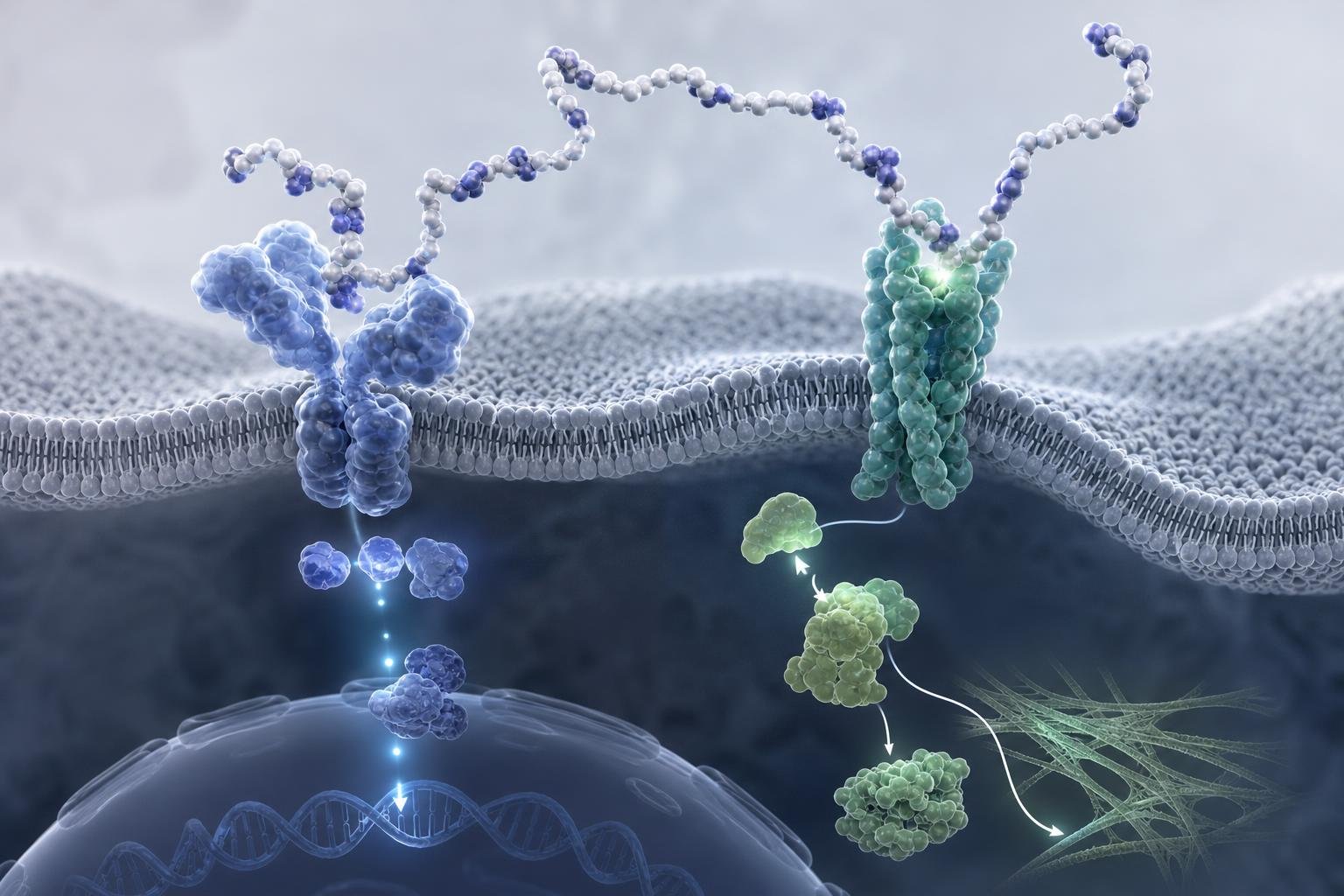
Tirzepatide is a synthetic peptide designed to activate two incretin hormone receptors, GIP and GLP-1, which are involved in glucose regulation, appetite signalling and energy balance. For UK readers searching for information, the safest starting point is the science: what the molecule is, how it is studied, and what it is not.
The phrase tirzepatide peptide UK often appears in informational searches, but it can blur several different ideas: a chemical entity, a pharmaceutical ingredient, a class of metabolic research, and questions about clinical use. This article is an educational overview only. It does not provide dosing, sourcing, treatment or personal-use guidance.
What is tirzepatide?
Tirzepatide is a lab-made peptide, meaning it is built from a chain of amino acids. Peptides are smaller than most proteins but can still interact very precisely with receptors on cells. In biology, many hormones and signalling molecules are peptides, including some that help coordinate digestion and metabolic responses after eating.
What makes tirzepatide scientifically notable is that it is designed to engage two receptor systems rather than one. These receptors are:
- GIP receptor: GIP stands for glucose-dependent insulinotropic polypeptide. It is an incretin hormone released from the gut after food intake.
- GLP-1 receptor: GLP-1 stands for glucagon-like peptide-1. It is another incretin hormone involved in post-meal signalling.
Incretins help the body coordinate a response to nutrients. Their effects are context-dependent and involve multiple organs and signalling pathways. Tirzepatide is therefore often described as a dual GIP and GLP-1 receptor agonist, meaning it can activate both receptor types.
Why is it called a peptide?
A peptide is simply a molecule made from amino acids linked in a chain. Amino acids are the building blocks used throughout biology. The sequence, shape and chemical modifications of a peptide determine how it behaves in the body and what it can bind to.
Natural incretin hormones are peptides, but they are usually broken down quickly by enzymes. Synthetic peptide medicines and research molecules may be engineered to alter stability, receptor activity or duration of action. Those design details are part of medicinal chemistry, not a reason to assume all peptides are interchangeable. Two peptides can have very different targets, risks and uses.
How tirzepatide relates to GIP and GLP-1
GIP and GLP-1 are both released by specialised cells in the gut. They help signal that nutrients have arrived. Their receptors are found in tissues involved in metabolic regulation, including the pancreas and areas of the brain that participate in appetite signalling.
GLP-1 receptor agonists are already a well-known area of metabolic medicine and biomedical research. Tirzepatide differs because it also activates the GIP receptor. Researchers have been interested in whether combined signalling through these pathways produces different biological effects from targeting GLP-1 alone.
It is important not to reduce this biology to a single mechanism. Metabolic regulation involves the brain, gut, pancreas, liver, fat tissue, hormones, nerves and behaviour. A receptor agonist can influence signalling networks, but it does not replace the complexity of human physiology.
What researchers study
Clinical and laboratory research around tirzepatide has focused on metabolic outcomes, receptor pharmacology and how dual incretin signalling behaves in humans. In plain terms, scientists are interested in questions such as:
- how strongly the molecule activates GIP and GLP-1 receptors;
- how receptor activation changes downstream cellular signals;
- how incretin pathways relate to blood glucose regulation;
- how appetite and satiety signalling may be affected;
- how benefits and adverse effects are balanced in controlled clinical settings.
These questions are investigated using controlled methods because biological effects can vary between people. Factors such as underlying health, concurrent medicines and individual physiology matter. That is why information about a molecule should not be converted into self-directed treatment decisions.
Common misunderstandings
Peptide does not mean harmless
The word peptide can sound technical but benign. In reality, biological activity is exactly why peptide molecules are studied. A compound that meaningfully affects hormone receptors can also have unwanted effects, contraindications or interactions. Safety depends on context, formulation, clinical oversight and individual circumstances.
Research interest is not the same as personal suitability
A molecule can be scientifically important without being appropriate for everyone. Research findings describe patterns observed under specific conditions. They do not diagnose a person, predict individual response or provide a treatment plan.
Online terminology can be imprecise
Search results may mix educational articles, commercial pages and informal discussions. Terms such as research peptide, active ingredient and medicine are not always used consistently online. For a reader, the key distinction is whether the discussion is about established biology, regulated clinical care, or unsupported personal use. Those categories should not be blurred.
UK-focused considerations
For readers in the UK, it is sensible to separate general scientific learning from questions about access, prescribing or purchase. Rules, availability and clinical guidance can change, and they are not the subject of this overview. Decisions about medicines belong in properly qualified healthcare settings, not in search snippets or online forum discussions.
A reliable educational approach is to look for sources that explain the receptor biology, the limits of the evidence and the difference between population-level research and individual medical care. Be cautious of pages that promise specific outcomes, minimise risks, or present complex metabolic science as a simple lifestyle shortcut.
Key takeaways
- Tirzepatide is a synthetic peptide that activates both GIP and GLP-1 receptors.
- GIP and GLP-1 are incretin hormones involved in post-meal metabolic signalling.
- The term peptide describes the molecule’s amino-acid structure, not its safety or suitability.
- Clinical relevance depends on regulated medical context and individual assessment.
- This topic is best understood as part of broader incretin and metabolic science.
FAQ
Is tirzepatide a natural hormone?
No. Tirzepatide is a synthetic peptide designed to interact with receptors used by natural incretin hormones. It is related to incretin biology, but it is not simply a natural hormone copied into a product.
Why are GIP and GLP-1 discussed together?
They are both incretin hormones released from the gut after eating. Tirzepatide is notable because it targets receptors for both pathways, which is why it is described as a dual incretin receptor agonist.
Does this article explain how to use tirzepatide?
No. This is an informational research overview. It does not provide dosing, treatment, purchasing, sourcing or personal-use advice.
Is every peptide similar to tirzepatide?
No. Peptides vary widely in sequence, structure, receptor targets and biological effects. The fact that two molecules are peptides tells you very little about whether they act in the same way.
Bottom line: tirzepatide is best understood as a carefully engineered peptide acting on incretin receptor pathways. The science is significant, but responsible discussion should keep clear boundaries between education, clinical evidence and individual medical decisions.
Intended for in-vitro laboratory research only. Not for human or animal consumption.