
Peptides in the UK: a plain-English research guide
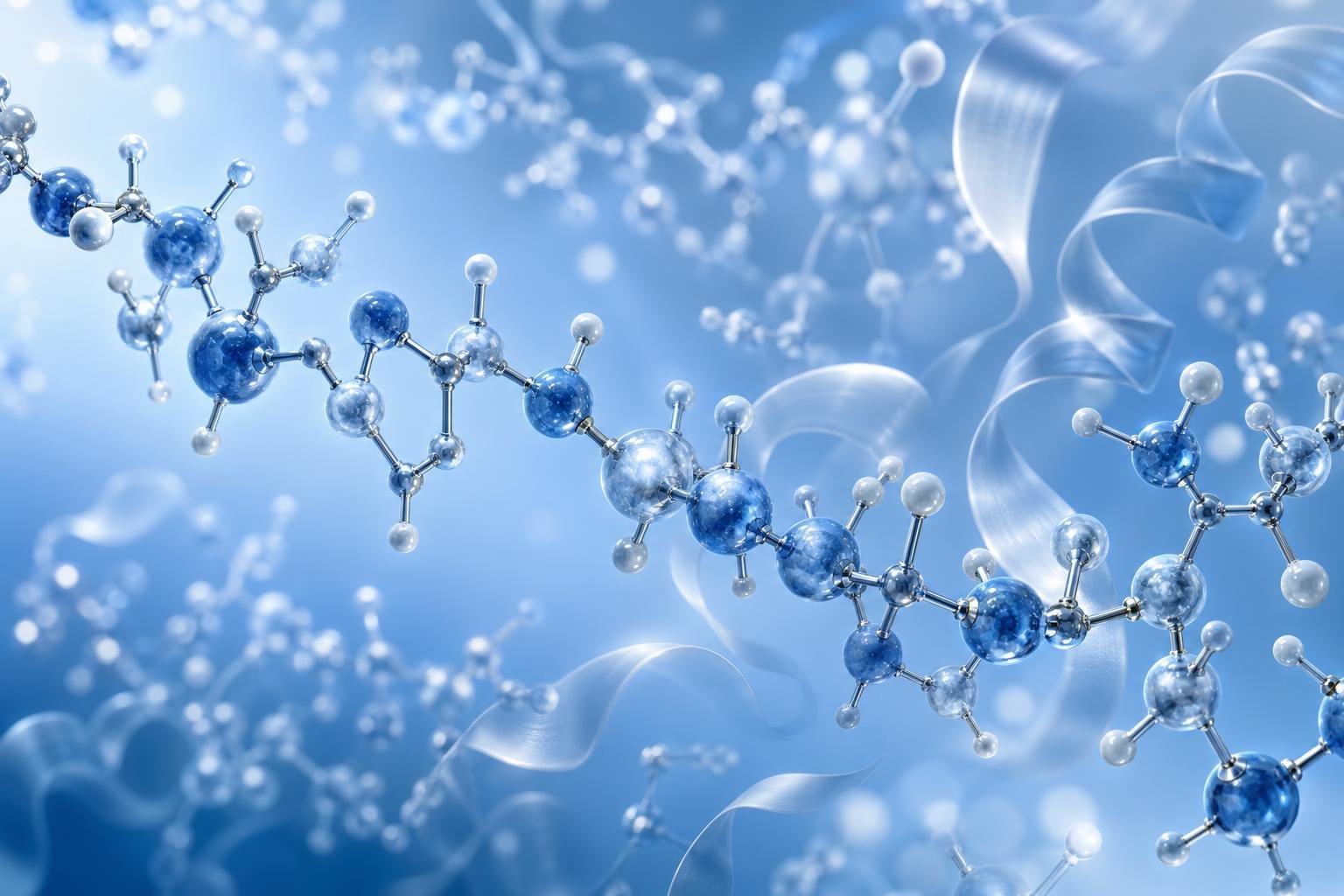
Peptides are short chains of amino acids that sit between individual amino acids and larger proteins. They occur naturally in the body, are widely studied in biology and medicine, and should not be interpreted as automatically safe, effective, legal or appropriate for personal use just because they are described as “peptides”.
What are peptides?
Peptides are molecules made from amino acids joined together by peptide bonds. Amino acids are often described as the building blocks of proteins. When only a relatively small number of amino acids are linked, the molecule is usually called a peptide; when the chain is longer and folds into a complex structure, it is usually called a protein.
The boundary is not always exact, but the distinction is useful. A peptide may contain just a few amino acids, while a protein may contain hundreds or thousands. Both can be biologically active, meaning they can interact with cells, enzymes or receptors in highly specific ways.
Why peptides matter in biology
Peptides are involved in many normal biological processes. Some act as signals between cells, some help regulate physiological systems, and some are fragments produced when larger proteins are broken down. Their effects depend on their structure, where they are found, and which receptors or enzymes they interact with.
In simple terms, the relationship looks like this:
- Amino acids are the individual building blocks.
- Peptides are short chains of amino acids.
- Proteins are larger amino acid chains that often fold into specialised shapes.
- Receptors and enzymes are biological targets that some peptides can bind to or influence.
This is one reason peptides are important in research: small changes in a peptide’s amino acid sequence can alter how it behaves. A single substitution may change stability, binding, selectivity or biological activity.
Natural peptides, synthetic peptides and peptide medicines
The word “peptide” can refer to several different categories, which are often confused online.
Natural peptides
Natural peptides are produced by living organisms. Examples include signalling peptides and peptide hormones. These molecules are part of normal biology and are tightly controlled by the body’s own systems.
Synthetic peptides
Synthetic peptides are made in laboratories. Scientists can create a peptide with a defined amino acid sequence for experiments, analytical standards or further development. A synthetic peptide is not automatically a medicine; it may be a research tool, a manufacturing intermediate, or simply a molecule being studied.
Peptide-based medicines
Some approved medicines are peptide-based or peptide-like. These products are developed, tested, manufactured and regulated under medicines frameworks. In the UK, medicines are overseen by the Medicines and Healthcare products Regulatory Agency (MHRA). This does not mean that every substance marketed with the word “peptide” has the same status, quality controls or evidence base as a licensed medicine.
Why researchers study peptides
Peptides are attractive to researchers because they can be highly selective in the way they interact with biological targets. Their sequence can be designed, measured and modified with precision. This makes them useful in many areas of basic and applied science, including biochemistry, pharmacology, immunology and materials research.
Common research questions include:
- How does a peptide bind to a receptor or enzyme?
- Which amino acid changes alter activity?
- How stable is a peptide under different conditions?
- Can a peptide act as a marker, signal or experimental probe?
- How does its three-dimensional shape affect its function?
These are scientific questions rather than consumer instructions. A peptide being interesting in a laboratory setting does not prove that it is suitable, safe or beneficial for a person to use.
Interpreting peptide claims carefully
Peptides are frequently discussed in broad terms, but the details matter. Two peptides can have very different properties even if their names sound similar. The route by which a molecule enters a system, how it is broken down, its purity, its formulation and its target all influence what it may or may not do.
It is sensible to be cautious about claims that make peptides sound like a single category with predictable effects. “Peptide” describes a chemical class, not a guarantee of outcome. Scientific evidence is usually specific to one molecule, one context and one method of study.
Quality, identity and evidence
In research, peptides are commonly assessed using analytical methods that check identity, purity and structure. These may include techniques such as mass spectrometry or chromatography. Such testing helps researchers understand whether a sample is what it is claimed to be and whether impurities are present.
Evidence also varies by setting. Data from a cell experiment, an animal model and a well-controlled human clinical study answer different questions. Early-stage findings can be useful, but they should not be treated as proof of real-world benefit. Responsible interpretation means asking what was studied, in whom or what, under what conditions, and with what limitations.
Peptides in a UK context
For readers searching for information on peptides in the UK, the main point is that terminology can be misleading. A peptide might be a naturally occurring molecule, a laboratory reagent, an ingredient described in cosmetic science, or an active substance in a regulated medicine. These categories are not interchangeable.
UK regulatory bodies and professional standards distinguish between medicines, medical devices, cosmetics, foods and laboratory materials. The classification depends on intended use, claims, composition and evidence. This article is educational and does not advise on personal use, diagnosis, treatment, purchasing or sourcing.
Key takeaways
- Peptides are short amino acid chains, distinct from but related to proteins.
- They can be natural, synthetic, experimental or part of regulated medicines.
- Biological activity depends on the exact peptide and its context.
- Laboratory interest is not the same as proven benefit or suitability for human use.
- Claims should be judged molecule by molecule, with attention to evidence and regulation.
FAQ
Are peptides the same as proteins?
No. Peptides and proteins are both made from amino acids, but peptides are generally shorter chains. Proteins are usually larger and often fold into complex structures with specialised functions.
Are all peptides medicines?
No. Some medicines are peptide-based, but many peptides are natural biological molecules or research compounds. A peptide’s legal and scientific status depends on its identity, intended use, claims and regulatory classification.
Does “peptide” mean safe?
No. Safety cannot be assumed from the word “peptide”. It depends on the specific molecule, exposure, quality, context and evidence. Scientific or medical conclusions require appropriate data.
Why is peptide research important?
Peptides help scientists understand cell signalling, molecular recognition and biological regulation. Their defined structures also make them useful tools for studying how molecules interact in living systems.
Intended for in-vitro laboratory research only. Not for human or animal consumption.