
Peptides in the UK: Understanding the Science Behind “Buy” Searches
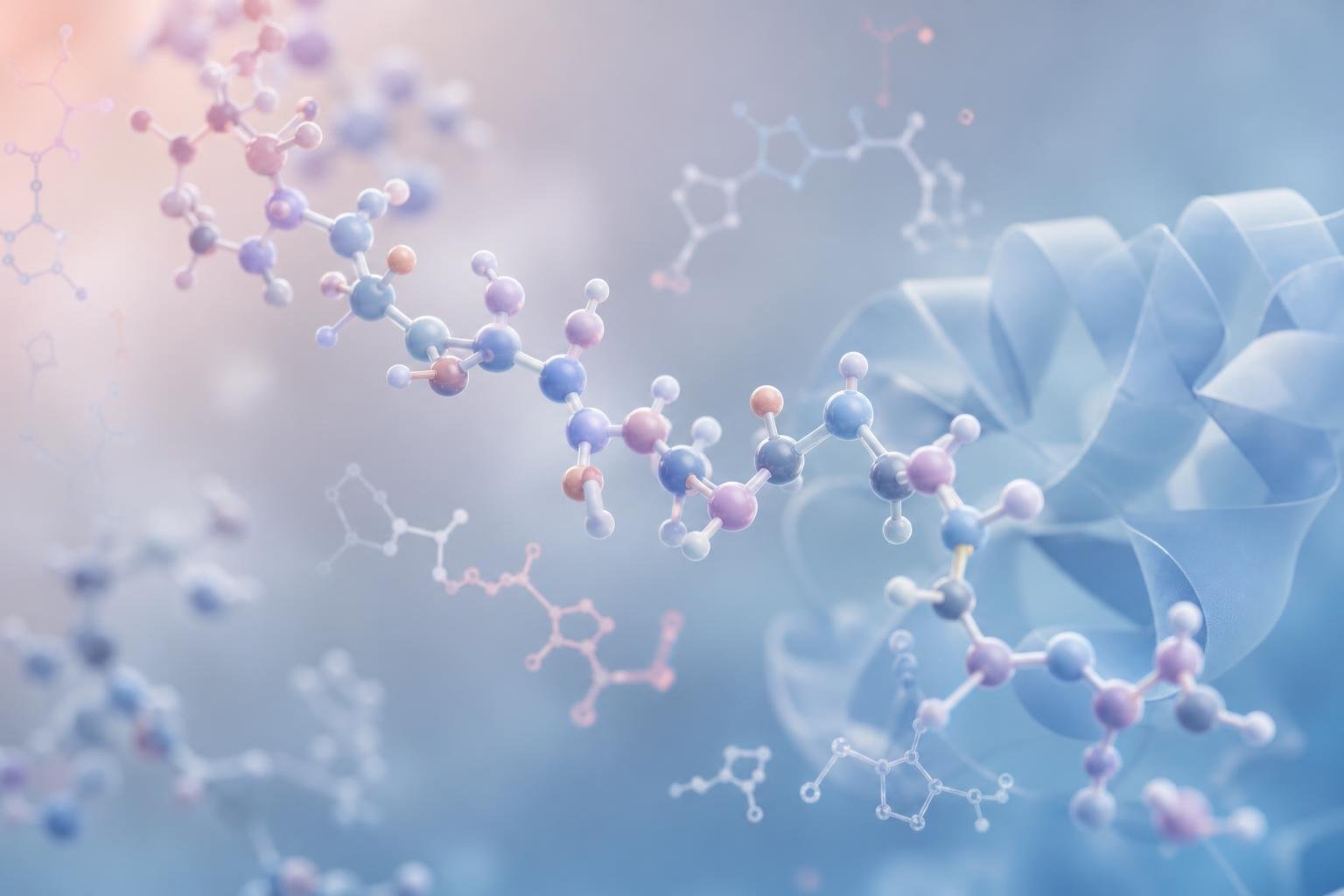
Short answer: Peptides are small chains of amino acids that can act as biological signals, structural fragments or research tools. Searches such as “peptides buy UK” often combine scientific curiosity with commercial intent, but this article does not provide buying, sourcing, dosing or personal-use advice.
What are peptides?
Peptides are molecules made from amino acids joined together by peptide bonds. Amino acids are the same building blocks that make up proteins, but peptides are usually shorter than full proteins. There is no single universal cut-off, yet the distinction is useful: a short signalling molecule may be described as a peptide, while a large folded molecule with a defined biological job is usually called a protein.
In living organisms, peptides are involved in many ordinary biological processes. Some act as messengers between cells, some are fragments produced when proteins are broken down, and others help researchers study how cells respond to specific molecular signals. Their effects depend on their sequence, shape, concentration, stability and the biological system in which they are studied.
Why the phrase “peptides buy UK” is complicated
The phrase “peptides buy UK” sounds straightforward, but it can point to several very different interests. A laboratory scientist may be thinking about a custom peptide for an experiment. A member of the public may have seen online claims about appearance, performance, ageing or body composition. A business may be looking at commercial demand rather than scientific evidence.
Those contexts should not be treated as the same thing. A peptide used as a controlled research reagent is not automatically suitable for personal use. A peptide discussed in a scientific paper is not necessarily an approved medicine. A claim on a website is not the same as a demonstrated clinical benefit.
Peptides as biological molecules
Peptides can interact with receptors, enzymes, membranes and other proteins. In simple terms, they may work like molecular messages: one cell releases a signal, another cell detects it, and a biological response follows. This is one reason peptides are important in endocrinology, immunology, neuroscience and cell biology.
However, peptide behaviour is highly context-dependent. A molecule that produces a measurable effect in a dish of cells may not have the same effect in a whole organism. Peptides can also be broken down by enzymes, fail to reach a target tissue, bind to unintended targets or behave differently depending on formulation and route of exposure. These scientific uncertainties are one reason commercial claims should be read cautiously.
Research peptides, medicines and online claims
It is useful to separate three categories that are often blurred online:
- Endogenous peptides: peptides naturally produced by the body, such as signalling molecules involved in normal physiology.
- Research peptides: materials used in laboratory work to test hypotheses, develop assays or explore biological pathways.
- Peptide medicines: pharmaceutical products that have been developed, tested and authorised for specific medical uses.
The same broad word, “peptide”, may appear across all three categories, but the practical meaning is different. Research use does not imply suitability for self-administration. Likewise, the existence of peptide-based medicines does not validate unrelated products or unverified claims.
Common misunderstandings
“Natural” does not mean low risk
Because peptides are made from amino acids, they may sound inherently gentle or natural. That is misleading. Many powerful biological signals are natural. The relevant question is not whether a molecule resembles something found in biology, but what it does, how it is made, how pure it is, how it is tested and whether its intended use is supported by appropriate evidence.
More technical language does not prove better evidence
Commercial pages may use terms such as “receptor”, “pathway”, “bioavailability” or “clinical-grade” to sound scientific. These words can be meaningful in proper context, but they do not prove that a product is appropriate, lawful, safe or effective for a particular use. Responsible interpretation requires evidence, not just terminology.
Animal, cell and early-stage findings have limits
Much peptide research begins in cell cultures, biochemical systems or animal models. These studies can be valuable, but they are not the same as robust human evidence. Early findings may help scientists decide what to study next; they should not be treated as personal health instructions.
How to read peptide content more critically
When encountering peptide-related claims online, consider the following questions:
- Is the page discussing basic biology, laboratory research, a regulated medicine or a consumer product?
- Does it distinguish between experimental findings and established clinical use?
- Are benefits stated cautiously, or are broad promises being made?
- Does the page explain limitations, uncertainty and potential risks?
- Is the language educational, or mainly promotional?
These questions do not tell anyone what to buy or use. They help separate scientific explanation from marketing. That distinction matters because peptides are biologically active and the quality of online information varies widely.
What this article will not do
This overview does not recommend peptide products, suppliers, brands or routes of access. It does not explain how to source peptides, compare vendors, assess personal suitability, prepare materials or use peptides for any health, cosmetic or performance purpose. Those areas can involve medical, legal and safety considerations that cannot be resolved by a search phrase.
If a peptide is being considered in a medical context, the appropriate route is discussion with a qualified healthcare professional. If a peptide is being discussed in a research context, the relevant standards are those of the institution, study design, ethics, quality control and applicable governance.
FAQ
Are peptides the same as proteins?
No. Both are made from amino acids, but peptides are generally shorter, while proteins are larger molecules that often fold into complex structures. The boundary is not always exact.
Does a peptide being studied mean it works in people?
Not necessarily. Laboratory or animal findings can be scientifically useful, but they do not automatically translate into proven human outcomes.
Can online peptide claims be trusted?
They should be assessed carefully. Scientific-sounding language is not a substitute for appropriate evidence, quality standards and relevant professional oversight.
Bottom line
Peptides are important biological molecules and valuable tools in modern research. The difficulty is that online commercial language can make experimental science, regulated medicine and consumer marketing look similar. A careful reader should keep those categories separate, avoid assuming that research equals personal use, and treat broad benefit claims with caution.
Intended for in-vitro laboratory research only. Not for human or animal consumption.